
Graphite Nanopowder COOH Modified

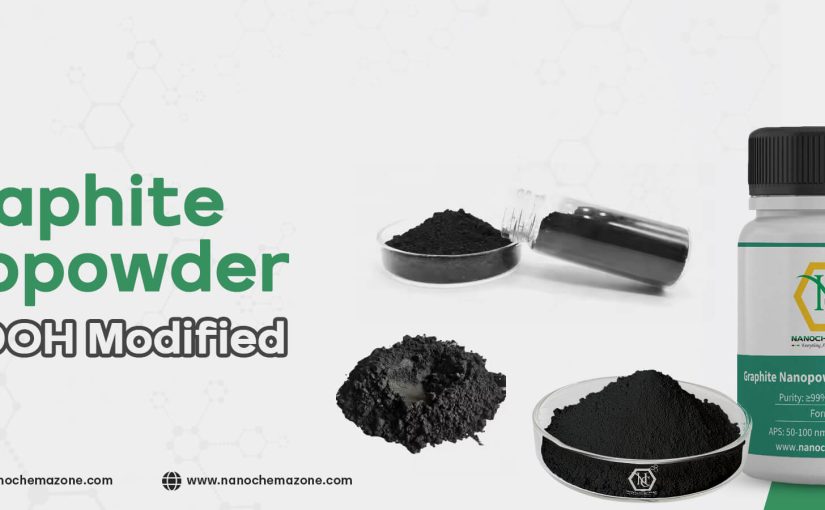
Graphite Nanopowder COOH Modified: A Comprehensive Guide to an Advanced Material

Graphite Nanopowder COOH Modified is a groundbreaking material that has carved a niche in various high-tech industries. Its exceptional purity, customizable size ranges, and functionalized surface properties make it a versatile product with numerous applications. Manufactured by Nanochemazone, this product stands out for its adherence to stringent quality standards and its ability to meet diverse industrial and research requirements.
In this detailed guide, we’ll explore the properties, production process, applications, and benefits, delving into why it is a sought-after material in fields ranging from electronics to biomedicine.
What is Graphite Nanopowder COOH Modified?
Graphite Nanopowder COOH Modified refers to graphite nanoparticles functionalized with carboxylic acid (-COOH) groups. These functional groups enhance the material’s chemical reactivity, making it highly compatible with polymers, resins, and other matrix materials. With a molecular weight of 12.01 g/mol and an exceptionally high melting point of 3550°C, this material exhibits excellent thermal stability and conductivity.
Key Characteristics
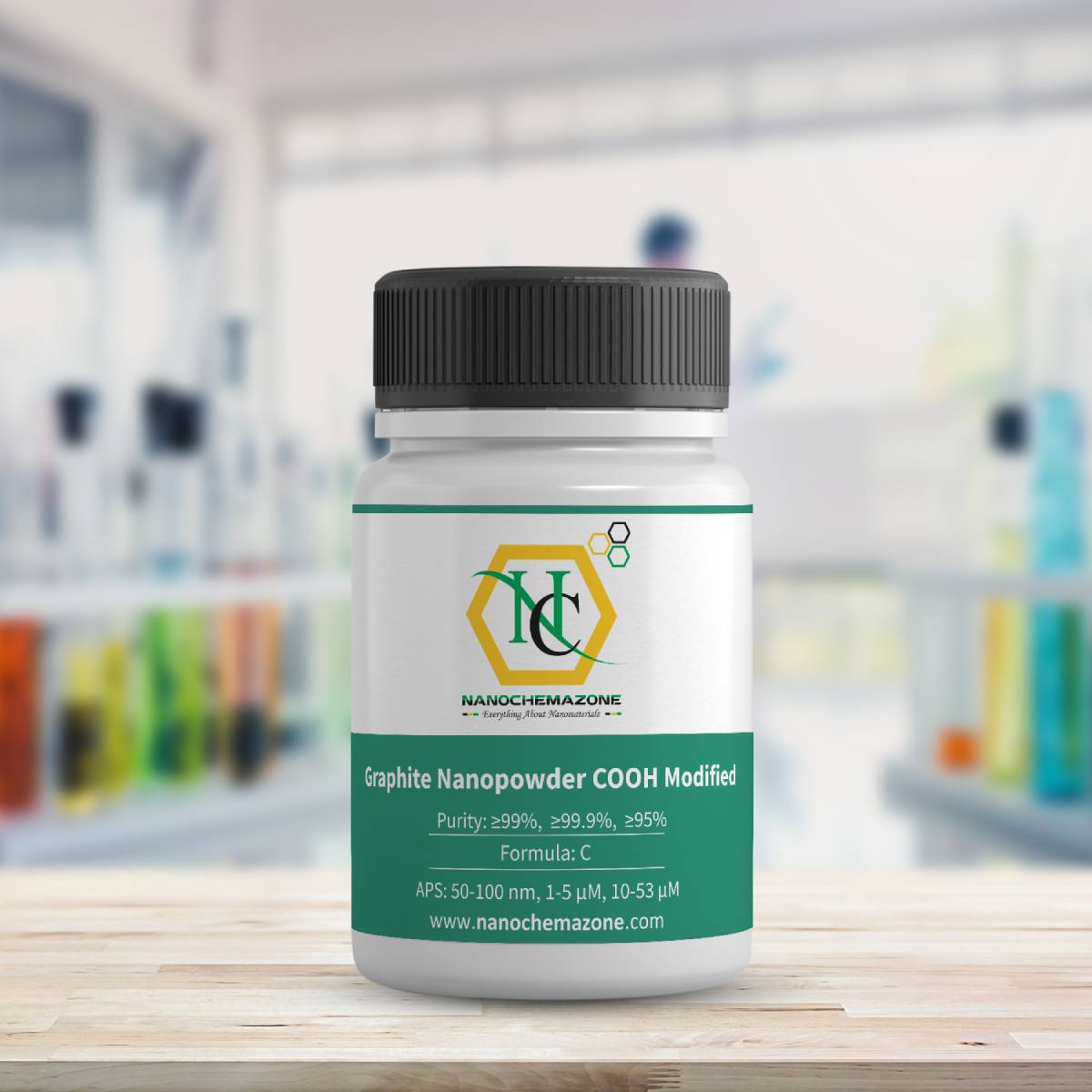
- CAS Number: 7782-42-5
- Appearance: Powder
- Purity Options: ≥99%, ≥99.9%, ≥95% (other purities are available)
- Size Ranges: APS 50–100 nm, 1–5 µM, 10–53 µM (Size Can be customized), Ask for other available size ranges.
- Primary Component: Carbon (C)
- Molecular Weight: 12.01g/mol
- Melting Point: 3550°C
- Product Codes: NCZ-RK-560/24
These properties position it as an indispensable material for a wide array of applications, from advanced ceramics to nanotechnology.
Production and Functionalization
Graphite Nanopowder COOH Modified is produced through a rigorous synthesis process that ensures high purity and uniform particle size. The functionalization process involves the attachment of carboxylic acid (-COOH) groups to the graphite nanoparticles, which significantly enhances their dispersion in various solvents and matrix materials.
Steps in the Production Process
- Graphite Sourcing: High-quality graphite is selected as the raw material.
- Nano-Sizing: The graphite is reduced to nanoparticle size through mechanical milling or chemical exfoliation.
- Functionalization: Chemical processes attach -COOH groups to the surfaces of the particles.
- Quality Control: Rigorous testing ensures the material meets specified purity, size, and functionalization standards.
The customization options available during production allow the material to cater to specific industrial or research needs.
Properties
1. Thermal Conductivity
With a melting point of 3550°C, is an excellent thermal conductor, making it suitable for high-temperature applications.
2. Electrical Conductivity
The carbon component imparts exceptional electrical conductivity, a critical property for applications in electronics and energy storage.
3. Chemical Reactivity
The addition of -COOH groups enhances the material’s ability to interact with other compounds, improving its compatibility with polymers and composite materials.
4. Mechanical Strength
Graphite nanoparticles enhance the mechanical properties of composites, including tensile strength and elasticity.
5. Size Customization
The availability of customizable particle sizes—from nanometers to micrometers—ensures versatility across various industries.
Applications
The unique properties that make it suitable for a wide range of applications.
1. Electronics and Electrical Applications
- Conductive Inks and Coatings: Used in the production of conductive inks for flexible electronics.
- Energy Storage Devices: Key material in lithium-ion batteries, supercapacitors, and fuel cells.
- Sensors: Enhances the sensitivity and reliability of various sensors.
2. Composite Materials
- Reinforcement Agent: Improves the mechanical strength and thermal stability of composites.
- Polymers: Acts as a filler material in polymer matrices to enhance electrical and thermal properties.
3. Biomedical Applications
- Drug Delivery: Functionalized nanoparticles enable targeted drug delivery systems.
- Biocompatibility: Its modified surface interacts favorably with biological systems, opening avenues for tissue engineering.
4. Advanced Ceramics
It is used in the production of high-performance ceramics, offering enhanced durability and conductivity.
5. Environmental Applications
- Water Treatment: Acts as an effective adsorbent for removing pollutants from water.
- Catalysis: Functions as a support for catalysts in chemical reactions.
6. Research and Development
- Nanotechnology: Essential material for studying nanoscale phenomena.
- Material Science: Used in the development of new materials with advanced properties.
Customization and Packaging
Nanochemazone offers extensive customization options to meet the unique requirements of various industries. Customers can choose from a range of purities (≥95%, ≥99%, ≥99.9%) and particle sizes (50–100 nm, 1–5 µM, 10–53 µM). Additional size ranges and purities are available upon request.
Packaging Options
The material is available in custom packaging to ensure safe transportation and storage. Typical packaging includes vacuum-sealed bags, jars, or bulk containers, depending on the quantity and application.
Advantages
- Enhanced Reactivity: The -COOH groups improve dispersion and interaction with other materials.
- Versatility: Suitable for use in diverse fields, including electronics, medicine, and environmental science.
- Customizability: Tailored purity and particle size options cater to specific needs.
- High Thermal and Electrical Conductivity: Ensures superior performance in demanding applications.
- Eco-Friendly: Functionalized graphite contributes to sustainable practices, especially in water purification and energy storage.
Safety and Handling
It should be handled with care to ensure safety. While the material is chemically stable, precautions must be taken to avoid inhalation or prolonged skin contact.
Safety Guidelines
- Personal Protective Equipment (PPE): Use gloves, safety goggles, and a dust mask during handling.
- Storage: Keep the material in a cool, dry place away from moisture and direct sunlight.
- Disposal: Dispose of unused material in accordance with local environmental regulations.
FAQs
Q1: What is the role of -COOH functionalization in Graphite Nanopowder?
The -COOH groups enhance the chemical reactivity and compatibility of the nanoparticles with other materials, making them ideal for composite materials and biomedical applications.
Q2: Can the particle size of the nanpowder be customized?
Yes, Nanochemazone offers customization of particle sizes ranging from nanometers to micrometers.
Q3: What industries benefit most from Graphite Nanopowder COOH Modified?
Industries such as electronics, medicine, environmental science, and material science benefit significantly from this advanced material.
Q4: Is Graphite Nanopowder COOH Modified environmentally friendly?
Yes, its applications in water treatment and energy storage contribute to sustainable practices.
Q5: How is this product packaged for industrial use?
Packaging options include vacuum-sealed bags, jars, or bulk containers, ensuring safe storage and transportation.
Q6: What is the material’s purity level?
The material is available in purities of ≥95%, ≥99%, and ≥99.9%, with other purities available upon request.
Conclusion
Graphite Nanopowder COOH Modified is a remarkable material that bridges the gap between advanced research and practical applications. Its exceptional thermal and electrical properties, coupled with its customizable nature, make it a preferred choice across industries. Whether you’re in electronics, medicine, or environmental science, this versatile material can revolutionize your processes and products.
If you’re looking to harness the potential of Graphite Nanopowder COOH Modified, Nanochemazone provides unparalleled quality, customization, and technical support to meet your specific needs.