

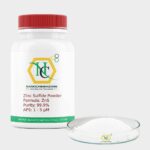
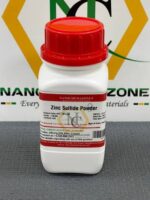
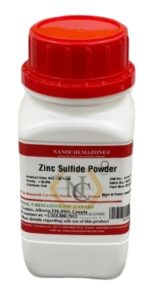
Description
Note: For pricing & ordering information, please contact us at sales@nanochemazone.com
Please contact us for quotes on Larger Quantities and customization. E-mail: contact@nanochemazone.com
Customization:
If you are planning to order large quantities for your industrial and academic needs, please note that customization of parameters (such as size, length, purity, functionalities, etc.) is available upon request.
NOTE:
Images, pictures, colors, particle sizes, purity, packing, descriptions, and specifications for the real and actual goods may differ. These are only used on the website for the purposes of reference, advertising, and portrayal. Please contact us via email at sales@nanochemazone.com or by phone at +1-780-612-4177 if you have any questions.
FAQs
Q1: What is zinc sulfide powder?
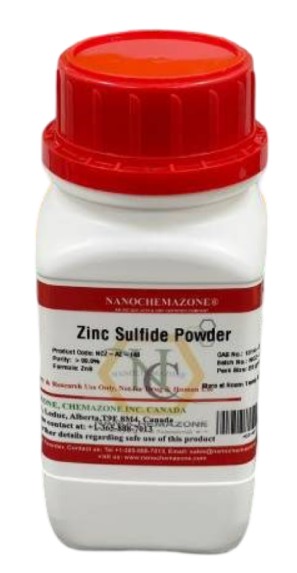
Zinc sulfide powder is a high‑purity inorganic compound with the chemical formula ZnS supplied as a white to off‑white fine powder, typically with particle sizes in the micron range, used as a basic material in optical, pigment, and advanced material applications.
Q2: What is zinc sulfide powder used for?
Zinc sulfide powder is used as a pigment in coatings, plastics, and ceramics; in optical materials such as infrared windows and lenses due to high transparency in visible and infrared ranges; and in phosphors, sensors, and semiconductor devices where its wide bandgap supports light emission and electronic behavior.
Q3: What particle sizes are available for zinc sulfide powder?
Zinc sulfide powder is available in various particle size ranges such as 1–5 µm, 3 µm, 5 µm, or larger custom sizes to match specific processing requirements in coatings, optical, and material manufacturing.
Q4: What purity levels does zinc sulfide powder have?
Zinc sulfide powder is typically supplied at high purity levels such as ≥99 % or ≥99.9 % to ensure minimal impurities, which supports consistent optical, mechanical, and electronic performance in specialized applications.
Q5: How should zinc sulfide powder be stored?
Zinc sulfide powder should be stored in airtight, dry containers at controlled room temperature, protected from moisture and contaminants, to preserve chemical stability and prevent oxidation or degradation before use.