| Product |
|
| Colour |
Black |
| Purity |
≥ 99.9% , ≥99%, ≥98%
(Other purities are also available) |
| Particle size |
1-5 µM, 10-53 µM (Can be customized),
Ask for other available size range. |
| Ingredient/MF |
ZrC |
| Product Code |
NCZ-C-110/20 |
| CAS Number |
12070-14-3 |
Zirconium Carbide Powder Description:
Like most carbides of refractory metals, zirconium carbide is sub-stoichiometric, i.e., it contains carbon vacancies.
At carbon contents higher than approximately ZrC0.98 the material contains free carbon.
ZrC reacts with water and acids and is pyrophoric.
It becomes readily oxidized in the air when exposed to elevated temperatures.
It shows a high amount of corrosion resistance property and contains carbon vacancies.
It reacts with water as well as acids.
Application:
1.Used as an abrasive, in metal cladding, in cermet, incandescent filaments, and cutting tools.
2. The mixture of zirconium carbide and tantalum carbide is an important cermet material.
3. Hafnium-free zirconium carbide and niobium carbide can be used as refractory coatings in nuclear reactors.
4. Zirconium carbide is used extensively as a coating of uranium dioxide and thorium dioxide particles of nuclear fuel.
5. The coating is usually deposited by thermal chemical vapor deposition in a fluidized bed reactor.
6. High-temperature wear-resistant surface materials
Please email us for the customization.
Email: contact@nanochemazone.com
Please contact us for customization and price inquiry
Note: We supply different size ranges of Nano and micron as per the client’s requirements and also accept customization in various parameters.
High-Purity Zirconium Carbide Powder
Zirconium Carbide Powder for Advanced Materials Research
Zirconium Carbide Powder (ZrC) is a high-performance refractory ceramic material known for its exceptionally high melting point, high hardness, excellent thermal stability, electrical conductivity, and resistance to wear and chemical attack. Nanochemazone supplies Zirconium Carbide Powder for advanced materials research, refractory applications, ceramics, protective coatings, cutting tools, powder metallurgy, composites, aerospace materials, and other specialized high-temperature applications.
Zirconium Carbide is an important transition-metal carbide that combines ceramic hardness with useful electrical and thermal properties. Its excellent stability at elevated temperatures makes it attractive for the development of advanced structural and functional materials designed for demanding environments.
Nanochemazone Zirconium Carbide Powder is available in different material grades with controlled chemical composition and particle-size distributions to support research, development, and specialized manufacturing requirements.
Product Information
- Product Name: Zirconium Carbide Powder
- Chemical Formula: ZrC
- Material Type: Refractory metal carbide / advanced ceramic
- Form: Powder
- Grades: Grade A and Grade B
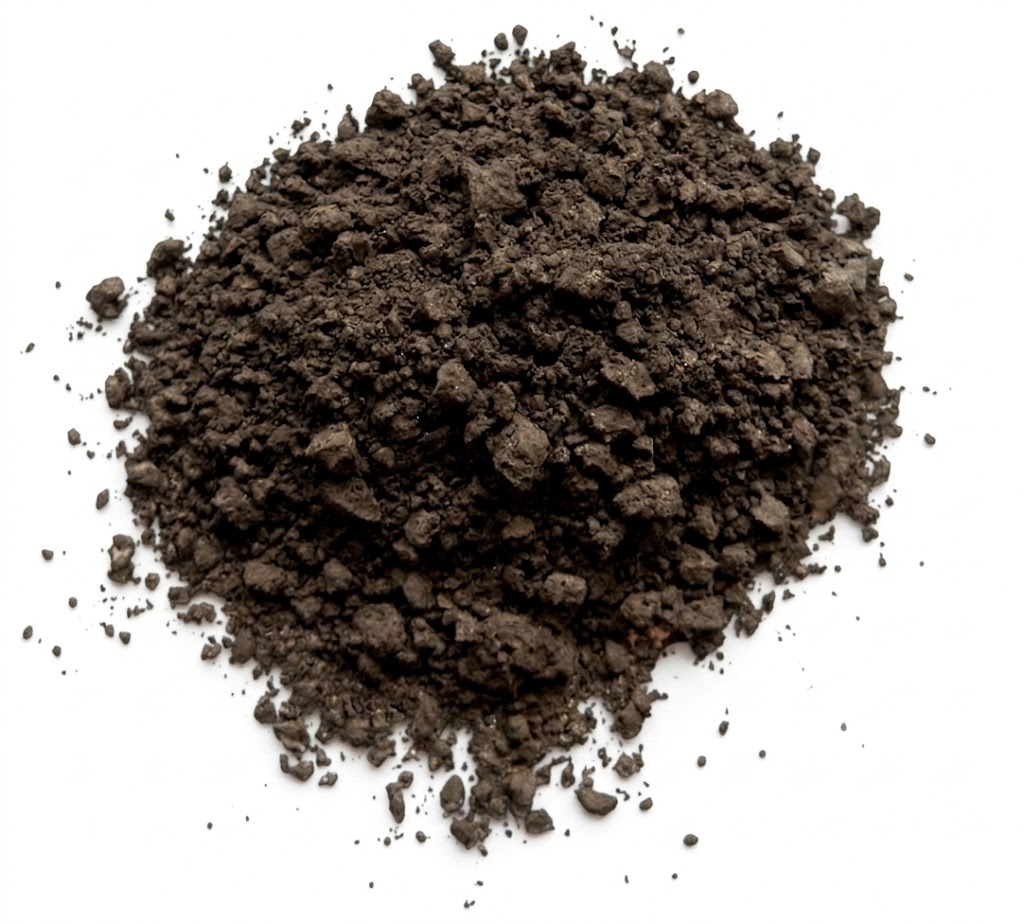
- Appearance: Black to dark gray powder
- Particle Size: Grade-specific particle-size distribution
- Application: Research, advanced ceramics, coatings, refractory materials, composites, metallurgy, and high-temperature materials
Key Features & Benefits
- High-performance refractory ceramic material
- Excellent high-temperature stability
- Very high melting point
- High hardness and wear resistance
- Good chemical and corrosion resistance
- Electrical conductivity
- Suitable for advanced ceramic processing
- Controlled carbon composition
- Controlled oxygen, nitrogen, and iron content
- Available in Grade A and Grade B specifications
- Grade-specific particle-size distributions
- Suitable for high-temperature and extreme-environment materials research
- Available for laboratory research and larger-scale requirements
Chemical and Physical Properties of Zirconium Carbide Powder
Zirconium Carbide Powder is available in Grade A and Grade B, with each grade having defined chemical composition and particle-size characteristics. These specifications allow users to select the material according to their processing requirements and desired powder characteristics.
Chemical Properties
Mass fraction in % [cg/g]
| Chemical Component |
Grade A |
Grade B |
| Zr + Hf |
87.8% min. |
87.4% min. |
| Hf |
2% max. |
2% max. |
| C Total |
11.4% min. |
10.8% min. |
| C Bound |
11.0% min. |
9.5% min. |
| C Free |
0.4% max. |
1.5% max. |
| Fe |
0.05% max. |
0.05% max. |
| O |
0.6% max. |
0.6% max. |
| N |
0.8% max. |
0.8% max. |
Grade A: Grade A Zirconium Carbide Powder has a minimum Zr + Hf content of 87.8%, minimum total carbon of 11.4%, and maximum free carbon of 0.4%. This specification provides a higher minimum carbide-related composition and tighter free-carbon control.
Grade B: Grade B Zirconium Carbide Powder has a minimum Zr + Hf content of 87.4%, minimum total carbon of 10.8%, and maximum free carbon of 1.5%. Grade B provides a different composition specification suitable for applications where its chemical and physical characteristics meet the required material specification.
Both grades have a maximum Hf content of 2%, Fe content of 0.05%, oxygen content of 0.6%, and nitrogen content of 0.8%.
Physical Characteristics
The particle-size distribution of Zirconium Carbide Powder varies by grade.
| Particle Size Parameter |
Grade A |
Grade B |
| D10 |
2–4 µm |
1–3 µm |
| D50 |
5–13 µm |
3–5 µm |
| D90 |
11–35 µm |
8–12 µm |
Grade A provides a broader specified particle-size distribution, while Grade B has a comparatively finer D50 and D90 range. The appropriate grade should be selected according to the intended processing method, dispersion requirements, sintering process, and final material application.
Applications of Zirconium Carbide Powder
Advanced Ceramics
Zirconium Carbide is widely studied as an advanced ceramic because of its high hardness, thermal stability, and resistance to high-temperature environments. It can be incorporated into ceramic formulations and composite systems designed for demanding applications.
High-Temperature Materials
ZrC is suitable for research involving materials exposed to extreme temperatures. Its high melting point and thermal stability make it valuable for refractory and high-temperature material development.
Aerospace Materials
Zirconium Carbide is investigated for aerospace and extreme-environment materials where resistance to heat, erosion, wear, and chemical degradation is important.
Protective Coatings
ZrC can be used in the development of hard, wear-resistant, and high-temperature protective coatings. Its hardness and thermal stability make it attractive for surface-engineering research.
Cutting Tools and Wear-Resistant Materials
The high hardness and wear resistance of Zirconium Carbide make it useful for research into cutting tools, hard materials, wear-resistant components, and protective surfaces.
Refractory Materials
Zirconium Carbide is an important refractory material for applications requiring stability under severe thermal conditions. It can be studied as a component of refractory ceramics and high-temperature composite systems.
Metal Matrix and Ceramic Matrix Composites
ZrC Powder can be incorporated into metal matrix and ceramic matrix composites to investigate improvements in hardness, wear resistance, thermal stability, and high-temperature performance.
Powder Metallurgy
The controlled particle-size distributions of Zirconium Carbide Powder make it suitable for powder-processing research, including powder metallurgy, sintering, hot pressing, and other advanced manufacturing processes.
Energy and Extreme-Environment Materials
Zirconium Carbide is investigated for specialized energy and extreme-environment applications because of its high-temperature stability, mechanical strength, and resistance to harsh operating conditions.
Materials Science Research
Researchers use Zirconium Carbide Powder in studies involving refractory materials, transition-metal carbides, solid-state chemistry, advanced ceramics, composites, coatings, metallurgy, and high-temperature materials.
Grade Selection
The Grade A and Grade B Zirconium Carbide Powder specifications provide different chemical and physical characteristics.
Grade A features a higher minimum Zr + Hf content, higher minimum total and bound carbon content, and lower maximum free-carbon content. It also has a D50 particle-size range of 5–13 µm.
Grade B has a slightly lower minimum Zr + Hf and carbon specification, a higher allowable free-carbon content, and a finer particle-size distribution with a D50 of 3–5 µm.
Users should select the appropriate grade based on chemical composition requirements, free-carbon tolerance, particle-size requirements, processing method, and final application.
Why Choose Nanochemazone Zirconium Carbide Powder?
Nanochemazone supplies Zirconium Carbide Powder for research laboratories, universities, industrial R&D facilities, advanced ceramic manufacturers, coating developers, refractory-material producers, and specialty-material users.
The availability of Grade A and Grade B specifications provides flexibility for applications requiring specific chemical composition and particle-size characteristics.
For requirements involving grade selection, particle size, quantity, packaging, analytical documentation, or customized specifications, contact Nanochemazone for current availability.
Important: Zirconium Carbide Powder should be handled according to the applicable Safety Data Sheet (SDS). Avoid unnecessary dust generation and inhalation and use appropriate engineering controls, personal protective equipment, workplace hygiene, storage, and waste-management procedures.
Zirconium Carbide Powder, ZrC Powder, High Purity Zirconium Carbide Powder, Zirconium Carbide Powder Supplier, Zirconium Carbide Powder Manufacturer, ZrC Ceramic Powder, Zirconium Carbide Grade A, Zirconium Carbide Grade B, Zirconium Carbide Micron Powder, Zirconium Carbide for Ceramics, Zirconium Carbide for Coatings, Zirconium Carbide for Cutting Tools, Zirconium Carbide for Aerospace, Zirconium Carbide for Refractory Materials, Zirconium Carbide for Advanced Materials, ZrC Powder Supplier, High Temperature Zirconium Carbide Powder.
Frequently Asked Questions (FAQ)
- What is Zirconium Carbide Powder?
Zirconium Carbide Powder is a refractory transition-metal carbide with the chemical formula ZrC. It is known for high hardness, high-temperature stability, a very high melting point, and resistance to wear and chemical attack.
- What is the chemical formula of Zirconium Carbide?
The chemical formula of Zirconium Carbide is ZrC.
- What is Zirconium Carbide Powder used for?
ZrC Powder is used in advanced ceramics, refractory materials, protective coatings, cutting-tool research, composites, powder metallurgy, aerospace materials, high-temperature materials, and advanced materials research.
- What grades of Zirconium Carbide Powder are available?
Nanochemazone offers Zirconium Carbide Powder in Grade A and Grade B, with different chemical composition and particle-size specifications.
- What is the difference between Grade A and Grade B Zirconium Carbide?
Grade A has a minimum Zr + Hf content of 87.8%, minimum total carbon of 11.4%, and maximum free carbon of 0.4%. Grade B has a minimum Zr + Hf content of 87.4%, minimum total carbon of 10.8%, and maximum free carbon of 1.5%. Grade B also has a finer specified particle-size distribution.
- What is the particle size of Grade A Zirconium Carbide Powder?
Grade A has a specified D10 of 2–4 µm, D50 of 5–13 µm, and D90 of 11–35 µm.
- What is the particle size of Grade B Zirconium Carbide Powder?
Grade B has a specified D10 of 1–3 µm, D50 of 3–5 µm, and D90 of 8–12 µm.
- Is Zirconium Carbide suitable for high-temperature applications?
Yes. ZrC is a refractory ceramic with excellent thermal stability and a very high melting point, making it suitable for research involving high-temperature and extreme environments.
- Is Zirconium Carbide electrically conductive?
Yes. Zirconium Carbide exhibits electrical conductivity, which makes it useful for research involving electrically functional ceramics, composites, and other advanced materials.
- Can Zirconium Carbide Powder be used for coatings?
Yes. ZrC is investigated for hard, wear-resistant, and high-temperature protective coatings and surface-engineering applications.
- Can Zirconium Carbide Powder be used in advanced ceramics?
Yes. Zirconium Carbide is an important advanced ceramic material and can be used directly or incorporated into ceramic and composite systems.
- What is the difference between bound carbon and free carbon?
Bound carbon refers to carbon associated with the zirconium carbide phase, while free carbon refers to carbon present outside the primary carbide composition. Controlling the levels of bound and free carbon can be important for powder composition and processing behavior.
- How should Zirconium Carbide Powder be stored?
Store Zirconium Carbide Powder in a tightly sealed, appropriately labeled container in a cool, dry, well-controlled environment. Prevent unnecessary dust generation and follow the applicable SDS for detailed storage and handling requirements.
- Can Nanochemazone supply bulk quantities?
Yes. Nanochemazone can supply Zirconium Carbide Powder in research quantities and larger quantities depending on grade, availability, and customer requirements.